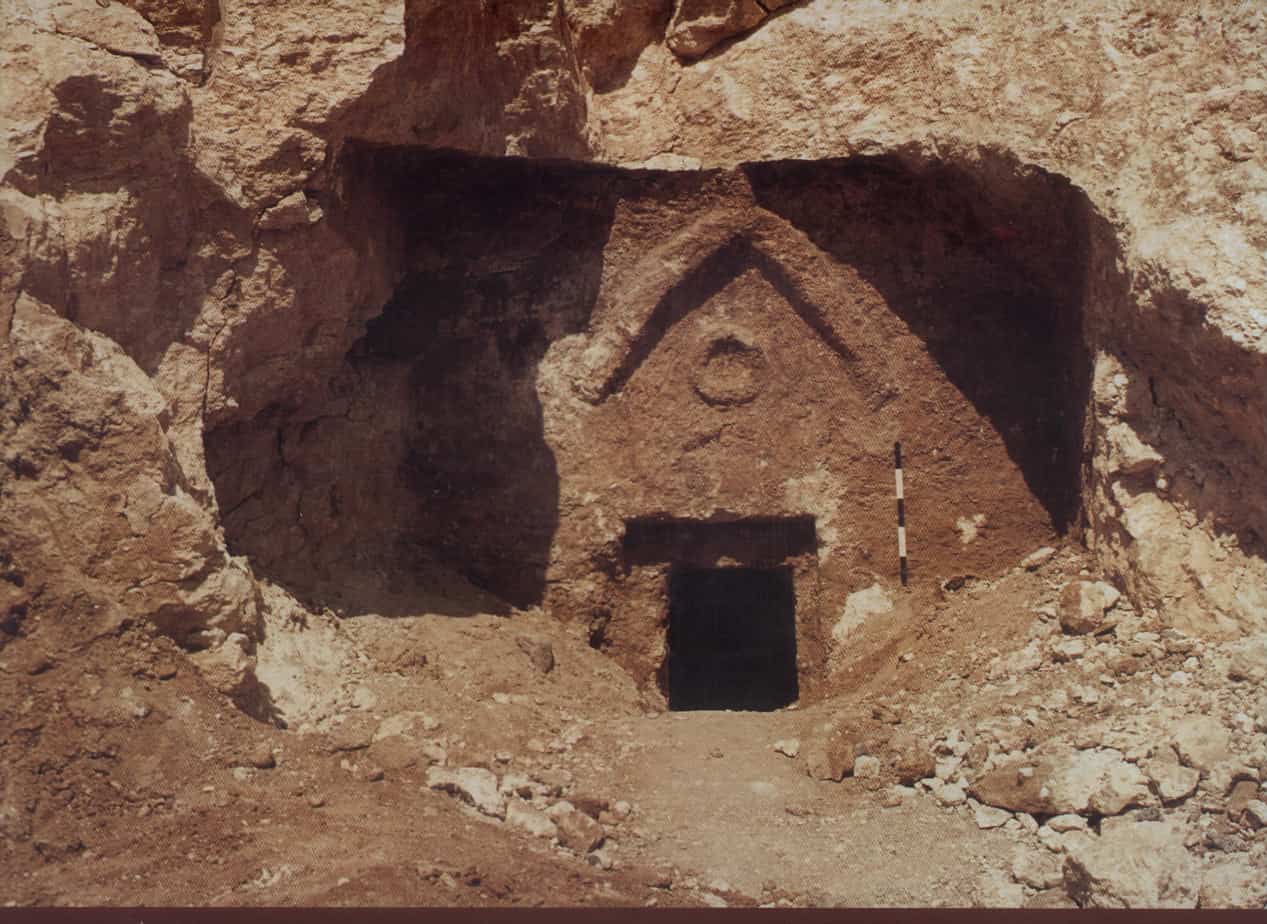
The Toronto Globe and Mail, Canada’s leading newspaper, ran a story yesterday titled “University of Toronto Scientist Puts Odds on Lost Tomb” that headlines Prof. Andrey Feuerverger’s statistical conclusions on the Talpiot Jesus tomb. Award winning writer Michael Posner, author of the piece, also offers a kind of “state of the question” update on a number of current issues related to the academic discussion of the tomb and its significance. It can be accessed on-line .
U of T scientist puts odds on lost tomb
Chance that ancient Jerusalem burial tomb did not contain bones of Jesus and family
calculated at 1 in 1,600
MICHAEL POSNER
FROM TUESDAY’S GLOBE AND MAIL
APRIL 22, 2008 AT 4:17 AM EDT
A University of Toronto mathematician is lending new support to the controversial claim that
an ancient burial tomb near Jerusalem once held the bones of Jesus of Nazareth and his
family.
In a peer-reviewed article published last month in the prestigious Annals of Applied
Statistics, Andrey Feuerverger places the odds of the 2,000-year-old tomb not belonging to
the Jesus family at 1 in 1,600.
This figure is even more bullish than the 1-in-600 figure that Dr. Feuerverger calculated a
year ago, when interviewed for The Lost Tomb of Jesus, a $4-million documentary produced
by James Cameron and directed by Toronto’s Simcha Jacobovici.
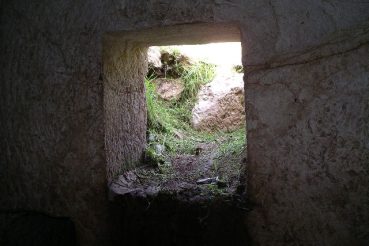
The tomb, now sealed beneath a housing development in Talpiot, east of Jerusalem, was
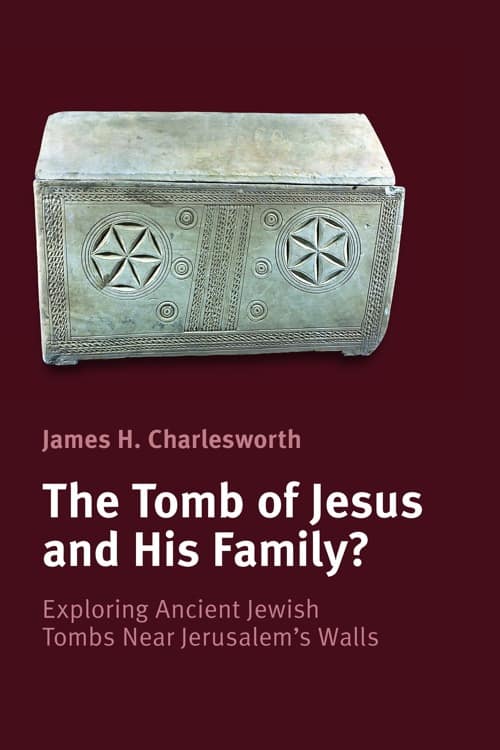
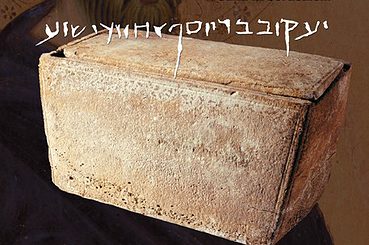
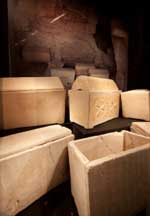
accidentally discovered in 1980. Its contents included 10 limestone ossuaries, six of which
were inscribed with evocative names, including “Jesus, son of Joseph, Maria, Jose [perhaps a
brother of Jesus], Mariamne, Matya and Judah, son of Jesus.”
It was Judaic custom at the time to place a deceased’s bones, a year after death, into bone
boxes stored in family tombs. Archeologists stumbling across these crypts typically turned
the remaining bone fragments over to Orthodox officials for reburial; inexplicably, there is
no report of what happened to the bones found at this site.
The film, adducing DNA evidence that suggested Jesus and Mary Magdalene might have
been married and had a son named Judah, triggered a tsunami of debate. Many orthodox
Christians viewed its claims as challenging the very foundations of the faith, which maintains
that Jesus never married, never fathered a child and, three days after he died, was resurrected
physically and ascended to heaven.
In the past year, six books and three other documentary films have been released, all
attempting to refute the thesis of The Lost Tomb of Jesus. Websites and bloggers, academic
and lay, have led a vituperative chorus denouncing the film as sensationalism and its findings
as shoddy science.
The filmmakers say orthodox Christianity has even flexed its power to suppress their
message. There’s no hard evidence of such tactics, but Britain’s Channel 4, which paid
£200,000 for British rights to the film, has yet to broadcast it. Discovery U.S., which aired
the documentary a year ago to enormous ratings, has since declined to rebroadcast it.
For years, archeologists attempted to deflect speculation about the tomb, saying that the
names inscribed on the Talpiot ossuaries were common to the period. But Dr. Feuerverger’s
analysis rejects that argument, noting that while the individual names might have been
common, this specific cluster of names so resonant of the New Testament is not. Indeed, in
January, at a symposium with about 50 academics in Jerusalem, no one made the case for
commonality.
Instead, opponents have challenged Dr. Feuerverger’s historical assumptions, notably that the
unusual Greek name Mariamne found on one of the ossuaries is an appropriate designation
for Mary Magdalene.
But even discounting the Mariamne assumptions, Dr. Feuerverger’s 51-page paper says that
the tomb has a 0.48 chance of belonging to Jesus. That means, says James Tabor, head of
religious studies at the University of North Carolina, “that if we had two tombs to examine,
one of them would be the Jesus tomb. With Feuerverger’s paper in print, a more responsible
discussion of the Talpiot tomb name frequencies and statistics can take place.”
One surprise development at the Jerusalem conference was the appearance of Ruth Gat,
widow of the Israeli archeologist who first excavated the Talpiot tomb. Presented with a
lifetime achievement award on his behalf, Mrs. Gat told the assembled academics that her
husband had died with the conviction that the tomb belonged to Jesus Christ and his family.
A Holocaust survivor, Mr. Gat had confided his views to his wife. He never went public, she
explained, because he feared doing so would produce a global backlash of anti-Semitism.
“The fact is,” maintains Mr. Jacobovici, the filmmaker, “that the conference shifted the
fulcrum of academic opinion from ‘couldn’t possibly be the Jesus tomb’ to ‘very well might
be.’ ”
Although most scholars remain deeply skeptical – 15 of those at the Jerusalem parley signed
an online manifesto rejecting the Jesus tomb arguments – cracks have formed in the academic
front.
“I don’t believe the idea can be simply dumped into the garbage heap of pseudo-science and
history,” says Israeli geologist Aryeh Shimron. “And no manifestos are going to change my
mind that easily. It deserves further, very detailed scientific study.”
University of Detroit professor Jane Schaberg, one of the world’s ranking experts on Mary
Magdalene, says it is “quite possible, even probable,” that the inscription on that ossuary
describes Magdalene and adds that the tomb “may very well belong to Jesus and his
followers, as opposed to Jesus and his family. My gut tells me it’s a movement site.”
What are the implications for orthodox Christians? “It means they should start studying what
was meant by resurrection in the first century,” Dr. Schaberg says. “Resurrection is not a
simple thing, where the body just stands up and walks out.”
“We might be dealing with the most tangible evidence ever of the existence of Jesus and his
family,” adds University of Toronto social historian Claude Cohen-Matlofsky. Even the
conference’s lead organizer, Princeton University’s James Charlesworth, a New Testament
scholar, said afterward, “I have reservations, but I can’t dismiss the possibility that this tomb
was related to the Jesus clan.”
Symposium delegates ultimately voted unanimously to reopen the investigation into the
Talpiot tomb as well as a second still unexamined crypt only nine metres away. So far, no
action has been taken.
© Copyright 2008 CTVglobemedia Publishing Inc. All Rights Reserved.
globeandmail.com and The Globe and Mail are divisions of CTVglobemedia Publishing Inc.,
444 Front St. W., Toronto, ON Canada M5V 2S9
Phillip Crawley, Publisher