
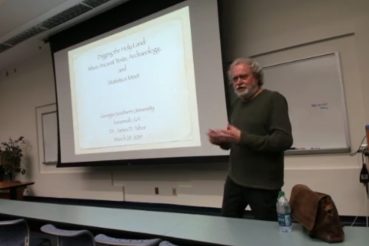
I thought some of you might enjoy this lecture I did in 2019 at the Georgia Southern University College of Science and Mathematics to a diverse group of scientists interested in the technical and scientific aspects of some of the archaeological discoveries in which I have been involved. This was…
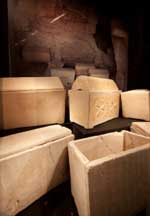
I thought some of my readers might find this older lecture from 2010 of interest–both for what it says and what we knew at the time. Many have asked why I would call my primary book on the “Historical Jesus” the The Jesus Dynasty–and refer then to Jesus and his “royal…
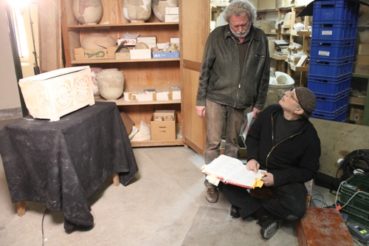
A major New Testament scholar recently commented to a colleague that “Tabor’s support of the idea that the Talpiot tombs might related to the historical Jesus is truly bizarre.” I won’t name the scholar but 99% of my readers would recognize the name. My reaction is someone needs to do…
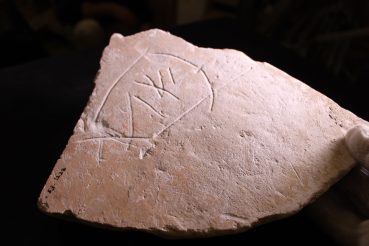
This lecture lays out what I believe is the earliest archaeological evidence related to the followers of Jesus. The standard view of many historians–though not all–is that we have nothing from the early Christians until the late 2nd or early 3rd centuries. Here I deal only with materials that are…
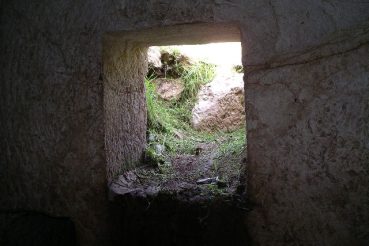
Over the years I have been amazed at how many of my academic colleagues, who do not find the arguments convincing that the East Talpiot “Jesus” family tomb can likely be identified with that of Jesus of Nazareth, are nonetheless quite sure that the Church of the Holy Sepulcher is…
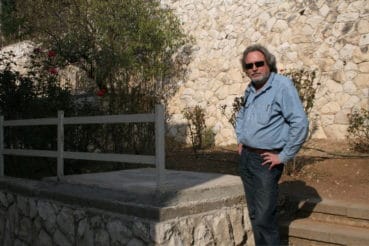
I have just updated this post from 2017 with lots of additional readings. I think this might be the most comprehensive summary of evidence pro and con for the question of whether the two Talpiot tombs in Jerusalem are connected to the Jesus family. One reads a lot of material…
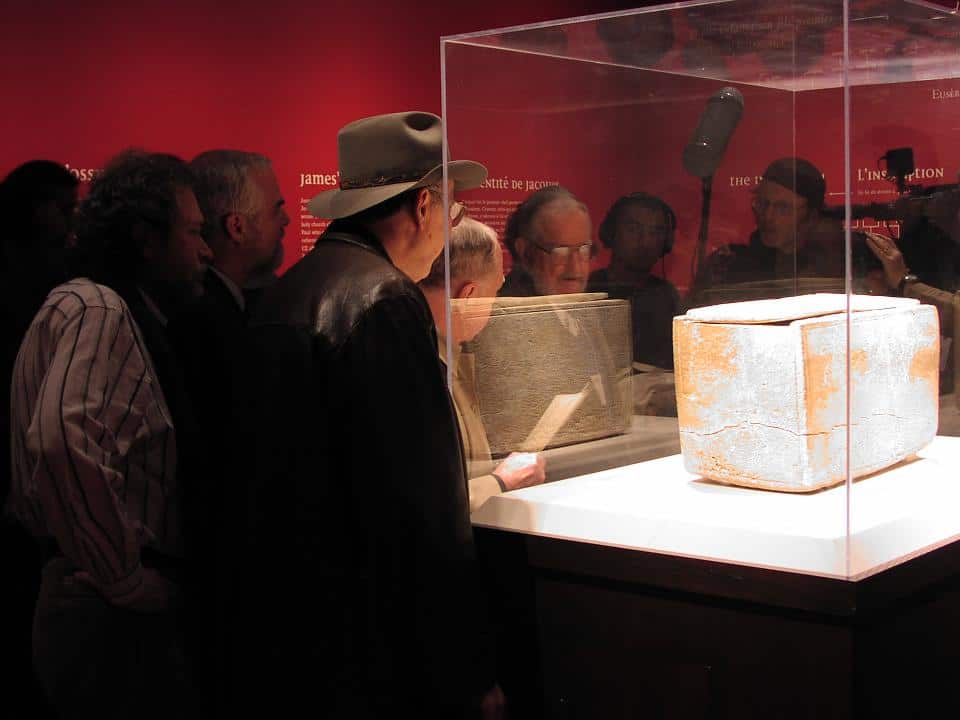
There is a new scientific paper published just this week by a distinguished team of international geologists, chemists, and earth scientists, titled “The Geochemistry of Intrusive Sediment Sampled from the 1st Century CE Inscribed Ossuaries of James and the Talpiot Tomb,” that is now available on-line. Based on extensive soil…
In March, 2007, when all the publicity on the Talpiot Jesus tomb broke, I wrote a blog post that summarized what we knew at the time regarding the 1980 discovery and excavation of the “Jesus tomb,” and perhaps more important, what we did not know. It is still worth reading for…
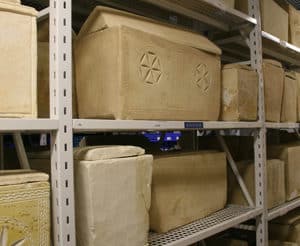
The east Talpiot tomb, exposed to view by demolition by the the Solel Boneh construction crew, was reported by engineer A. Shochat to the Israel Department of Antiquities on March 27, 1980. That was a Thursday. Neighbors, including local children, visited the tomb that afternoon and also called the Department…
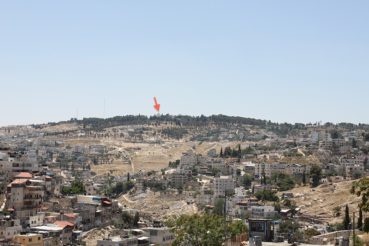
A dozen or so times a year I am asked by colleagues and interested readers alike “Just where are the Talpiot tombs located in relationship to the city of Jerusalem?” Some of these questioners are interested in visiting these tomb locations, whereas others are just wanting to get a sense…