The Tomb of the Shroud: A Scientific Analaysis
December 17th, 2009Here is the link to the academic peer-reviewed paper that can be dowloaded as a PDF or printed, that has generated the various news stories about the Akeldama “Tomb of the Shroud” around the world. Although much of the media focus has been on the “shroud” material and how it differs from that of the Shroud of Turin, which though important and interesting was reported some years ago and was discussed last year at the Boston Society of Biblical Literature Meeting by Antonio Lombatti and elsewhere. This paper is not about the shroud, but the skeletal remains of the one shrouded, who suffered from Hanson’s disease as well Tuberculosis, and also represents perhaps the first attempt to provide DNA profiles of an entire population of an ancient Jewish tomb from the Herodian period. The C-14 dating of the shroud material (early to mid 1st century CE), carried out by the University of Arizona lab under UNC Charlotte auspices, is accordingly relevant, as it places the organic material in the tomb, in temporal situ with the skeletal remains.
Molecular Exploration of the First-Century Tomb of the Shroud in Akeldama, Jerusalem
Carney D. Matheson1,2,3*, Kim K. Vernon3,4, Arlene Lahti1,5, Renee Fratpietro1, Mark Spigelman3,6, Shimon Gibson7, Charles L. Greenblatt3, Helen D. Donoghue6
1 Paleo-DNA Laboratory, Lakehead University, Thunder Bay, Canada, 2 Department of Anthropology, Lakehead University, Thunder Bay, Canada, 3 Department of Microbiology and Molecular Genetics, The Hebrew University-Hadassah Medical School, Jerusalem, Israel, 4 Department of Anthropology, Department of Zoology, University of Queensland, St. Lucia, Australia, 5 Department of Biology, Lakehead University, Thunder Bay, Canada, 6 Department of Infection, University College London, London, United Kingdom, 7 University of North Carolina at Charlotte, Charlotte, North Carolina, United States of America
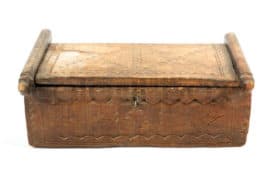
Abstract: The Tomb of the Shroud is a first-century C.E. tomb discovered in Akeldama, Jerusalem, Israel that had been illegally entered and looted. The investigation of this tomb by an interdisciplinary team of researchers began in 2000. More than twenty stone ossuaries for collecting human bones were found, along with textiles from a burial shroud, hair and skeletal remains. The research presented here focuses on genetic analysis of the bioarchaeological remains from the tomb using mitochondrial DNA to examine familial relationships of the individuals within the tomb and molecular screening for the presence of disease. There are three mitochondrial haplotypes shared between a number of the remains analyzed suggesting a possible family tomb. There were two pathogens genetically detected within the collection of osteological samples, these were Mycobacterium tuberculosis and Mycobacterium leprae. The Tomb of the Shroud is one of very few examples of a preserved shrouded human burial and the only example of a plaster sealed loculus with remains genetically confirmed to have belonged to a shrouded male individual that suffered from tuberculosis and leprosy dating to the first-century C.E. This is the earliest case of leprosy with a confirmed date in which M. leprae DNA was detected.
http://www.plosone.org/article/info:doi/10.1371/journal.pone.0008319

It has been my observation that so much that has been written about the tomb found in 1980 in East Talpiot south of the Old City of Jerusalem, the so-called “Jesus tomb,” has been heavy laden with emotion, presuppositions, and agendas both hidden and more obvious. Accordingly, it was refreshing to read the enlightening essay by Jerry Lutgen, “The Talpiot Tomb: What are the Odds?” recently posted on the Web site “Bible Interpretation.” You can read it in full here:
on and others have suggested that a more Bayesian model be used on the Talpiot inscriptions but I think the task is exceedingly problematic in that it rests upon an infinitely variable prediction of possibilities and expectations, many of which are historically disputable, that are impossible to gauge in a quantifiable way. I surely do not want to discount these efforts and I have welcomed all of these studies, but in terms of method and task, the two approaches are “apples” and “oranges.” I wonder if we will be any nearer to saying anything mathematically about the names in this tomb fitting, or not fitting, an imagined tomb of Jesus of Nazareth than we are at present. As I see it, the identification task has not to do with mathematics or probability, but with proposopography, the kind of thing that Rollston and Bauckham have begun to explore. If one can show that these names either fit, or do not fit, what we as historians might posit as a hypothetical “Jesus family tomb,” then we have something to discuss. Thus our tasks when it comes to the names are: epigraphy, statistics, and finally, history or prosopography. I have published my own attempt at that task in the periodical Near Eastern Archaeology 69:3-4 (2006):132-136, which can be downloaded in PDF format here: