
TaborBlog

“All things biblical” from the Hebrew Bible to Early Christianity in the Roman World and Beyond

Category: Christian Origins

The Forgotten Brother of Jesus (Part 2)

Part 1 was posted here. If you missed it please go back and read this series of posts in sequence.

Thus in ­Luke’s account in Acts, when James suddenly appears out of nowhere as leader of the Nazarene movement at the Jerusalem Council, we can see that Luke is well aware of ­James’s position. At this critical juncture he dared not leave James out of the story.

We must begin our search for James by looking at our New Testament sources—for it is from here that his memory was largely erased. We only have one substantial account of the history of the early Christian movement following the death of Jesus—the New Testament book we know as Acts of the Apostles. The same author who wrote the gospel of Luke wrote Acts as a second volume to his literary work. The book of Acts is largely responsible for the standard portrait of early Christianity in which Peter and Paul assume such a dominant role and James is largely left out. The presentation of Acts has become the story, even though ­Luke’s version is woefully one-­sided and historically questionable. Luke surely knew but was not willing to state that James took over the leadership of the movement after Jesus’ death. In his early chapters he never even mentions James by name and casts Peter as the undisputed leader of Jesus’ followers. But his major agenda in the book as a whole is to promote the centrality of the mission and message of the apostle Paul. Although Acts has twenty-­four chapters, once Paul is introduced in chapter nine the rest of ­Luke’s account is wholly about Paul—even Peter begins to drop out of the picture. Rather than “Acts of the Apostles” the book might better be named “The Mission and Career of Paul.”

My decision is…

This is not to say that Acts lacks historical value. We would be immensely diminished in our understanding of the early development of the Christian movement without it. And ironically, Luke has unwittingly left clues in the book of Acts that allow us to verify what we know from other sources—that James, not Peter, became the legitimate successor of Jesus and leader of the movement. We have to learn to read the book of Acts carefully, aware at all times of the scarcely veiled “spin” that Luke put on the story.

Luke more than any of the other gospels marginalizes the family of Jesus. Remember, Luke is the gospel that deliberately avoided even mentioning the brothers of Jesus, much less naming them, even though his source Mark plainly listed them as James, Joses, Judas, and Simon (Mark 6:3). Once when a woman in the crowd that followed Jesus cried out “Blessed is the womb that bore you and the breasts that you sucked,” Luke alone had Jesus reply, “No, rather blessed are those who hear the word of God and keep it” (Luke 11:27–28). Even at the cross, when Mark plainly said that “Mary the mother of James and Joses” as well as Jesus’ sister Salome were present, Luke changed this to read “the women [unnamed] who had followed him from Galilee” (Luke 23:49). At the burial scene he did the same. Rather than name “Mary Magdalene and Mary the mother of James” as present at the tomb as his source Mark did, he changed the account to read “the women [again unnamed] who had come with him from Galilee followed and saw the tomb” (Luke 23:55). In most cases Luke followed Mark rather closely as a source, much more so than Matthew, who constantly added his own editorial revisions. But Luke departed from Mark when it came to the mother and brothers of Jesus. I think he did this to avoid raising questions about ­Peter’s leadership of the Twelve or the superiority of ­Paul’s mission to the Gentiles. Such bold editing could not be accidental; there is something very important going on here. It is part of ­Luke’s overall agenda to recast the history of the early movement so that Paul comes out ahead of possible rivals including James. But what was their rivalry about?

Luke was a Gentile. In fact he was the only non-­Jewish writer in the entire New Testament. He emphasizes the Gentile version of Christianity that Paul espoused. He cannot deny that Jesus was a Jew, or that all of Jesus’ original followers were Jewish, or that the early Christian movement as a whole was an apocalyptic movement within Judaism. But he wrote at a time, two decades after the Jewish-­Roman revolt, when those Jewish origins of the movement were becoming marginalized and deemphasized and the imminent apocalyptic hope had faded.

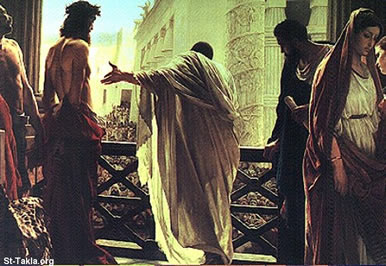
Luke was also pro-­Roman. Paul, his hero, was a Roman citizen and he wants his Gentile Roman readers to know and value that about him, and thus look with favor on the growing Gentile Christian movement. In his account of the trial of Jesus, Luke goes beyond Mark, his primary source, to emphasize that Pontius Pilate was a reasonable and just ruler who went to extraordinary lengths to get Jesus released. He removes the reference to Pilate having Jesus scourged and even omits the horrible mocking and abuse that Jesus suffered at the hands of ­Pilate’s Roman Praetorium guard (Luke 23:25). According to Luke, again following the theology of Paul, Jesus could not possibly have died “forsaken by God” since his death was part of ­God’s plan to bring forgiveness of sins to the world (Luke 24:47). Luke removed the agonizing final cry of Jesus and instead had Jesus pray directly for the Roman soldiers carrying out his crucifixion, “Father forgive them they know not what they do” (Luke 23:34). Luke was not writing history; he was writing theology. With that in mind we have to take what he tells us with extreme caution and keep in mind at all times his pro-­Paul and pro-­Roman agenda.

The Jesus Dynasty in Jerusalem

The primary reason that an understanding of the Jesus dynasty was lost to later Christian memory was that the book of Acts deliberately suppressed its existence. For Luke there was no possibility that the followers of Jesus retreated to Galilee in sorrow and despair after Jesus’ death. He puts all the “sightings” of Jesus in Jerusalem. He does not even mention Galilee and what might have happened there. These “sightings,” according to Luke, happened on Sunday, the very day the empty tomb was discovered, so that any doubts the apostles must have had in response to the brutal and horrible death of their leader were immediately dispelled. The new Pauline “Gospel” they were to preach to the Gentile world was put before them by Jesus himself. Luke explicitly said that Jesus told the Eleven “not to leave Jerusalem” (Acts 1:4). For Luke, Galilee represents the native, indigenous, Jewish origins of Jesus and his family. But something did happen in Galilee after the empty-­tomb experience and it surely must have involved Jesus’ mother, his brothers, and the entire entourage that had followed Jesus to Jerusalem from Galilee. As I described earlier, according to Matthew and John it was in Galilee that the followers found a renewal of their faith and the determination to carry on the movement. Luke would have none of that.

Luke presents quite a different story. According to Acts, about forty days after Jesus’ death the Eleven Apostles gathered together in Jerusalem in the Upper Room where they had had their last meal with Jesus to choose a successor to Judas. Luke carefully listed those leaders who were present:

Peter, and John, and James, and Andrew

Philip and Thomas, Bartholomew and Matthew

James son of Alphaeus, and Simon the Zealot, and Judas brother of James

He then carefully added a fateful qualifying sentence that has served to marginalize the Jesus family for two thousand years:

“All these [the Eleven] were constantly devoting themselves to prayer, together with certain women, including Mary the mother of Jesus as well as his brothers.” (Acts 1:13–14)

By separating here the Eleven from “Mary the mother of Jesus as well as his brothers” Luke has effectively managed to recast things so that James and Jesus’ other brothers played no leadership role at this crucial juncture of the movement. They are mentioned in passing, as if to say, “Oh yes, by the way, they were present but really not significant.”

But of course Luke felt obligated to include them as present. He did not dare to completely write them out of the account, knowing as he did the absolutely crucial role that they played. It is more than ironic that in listing the Eleven he mentions by name James, and Simon, and even notes that Judas is the brother of James. As we shall see, the book of Acts was written around a basic undeniable fact—James had assumed leadership of the movement, and Simon his brother took over after ­James’s death in 62 CE. Luke wrote Acts around 90 CE or even later, at least thirty years after James was dead. Luke was surely aware that Simon, also of the royal bloodline, had succeeded James and was head of the church in Jerusalem even as Luke was writing. Luke purposely ended his account in the book of Acts with ­Paul’s imprisonment in Rome around the year 60 CE. For him that is the end of the story—Paul in Rome preaching his gospel to the Gentile world. By choosing that cutoff date he had no obligation to record either the death of James or the succession of Jesus’ brother Simon. ­Luke’s story in Acts became the story of early Christianity for subsequent generations. What he chose not to tell was forgotten.

It is ironic that our earliest evidence regarding the leadership role that James and the brothers of Jesus played after Jesus’ death comes to us directly from Paul. Jesus was crucified in the year 30 CE. ­Paul’s letters date to the 50s CE. For this twenty-­year gap we have no surviving records. These are the silent years in the history of earliest Christianity. What we can know we have to read backward from the records that survive. Fortunately, in ­Paul’s letter to the Galatians, written around 50 CE, he reached back at least fourteen years in recounting his own autobiography. This gives us an original first-­person source, the most valuable tool any historian can work with, reaching back into the decade of the 30s CE.

In the letter to the Galatians Paul related that three years after joining the movement he made his first trip to Jerusalem, where he saw Peter, whom he calls by his Aramaic nickname Cephas. Paul stayed with him fifteen days. He then wrote, “But I did not see any other apostle except James the ­Lord’s brother” (Galatians 1:19). Not only did he call James an apostle but he clearly identified him as Jesus’ brother. The Nazarenes understandably distrusted Paul since he had so recently been at the forefront of those persecuting them, allied with the very leaders who had had Jesus killed. Paul saw Peter but he knew that it was essential that he meet with James, who was in charge. That Paul mentioned this in passing is all the more significant. He does not need to explain to anyone why he would have met with James.

Paul next related that fourteen years after his conversion, very close to 50 CE, he made a return trip to Jerusalem to receive authorization for his mission to the Gentiles from those he designated as the three “pillars” of the movement—namely James, Peter, and John the fisherman (Galatians 2:9).

That James is even named is significant, but that he is named first by Paul, before Peter and John, is absolutely critical for our understanding. The order of the names indicates an established order of authority.

The Council of Twelve, with James at the head, governs the Nazarenes, but among the Twelve, an inner group of three exercise the primary leadership—James, Peter, and John. James the brother of Jesus, sharing the royal lineage of King David, occupies the central position, but one on the right and another on the left flank him as “pillars.” Jesus, who had previously occupied the royal position, had been asked by the Twelve who among them would receive the privilege to “sit one on your right and one on your left” when the Kingdom arrived (Mark 10:37). Jesus had died without ever designating any of them for these two positions. Now, with James as the center, Peter and John had filled these roles as part of the messianic governing body that Jesus had inaugurated. We know this pattern from the Qumran community in the Dead Sea Scrolls. The Community Rule had stipulated: “In the Council of the Community there shall be twelve men and three priests, perfectly versed in all that is revealed of the Torah” (1QS 8).

Even though Luke had related nothing in Acts about James being one of the apostles, much less succeeding Jesus as leader of the group, when he reports this meeting of Paul with the Jerusalem apostles in 50 CE in his account in Acts 15 he also felt obligated to relate that James was in full charge of the proceedings. In the early chapters of Acts, Luke had mentioned Peter and John repeatedly, as a pair, indicating that they were in positions of leadership over the Nazarene movement. He had put these two first in his listing of the Twelve—indicating that they had been chosen for the “right and left” positions (Acts 1:13). This was a change from his earlier listing of the Twelve in his gospel, where he had a different order for the first four: Peter, Andrew, James, and John (Luke 6:14). That he has shifted the order in Acts, putting Peter and John in first and second place, fits with what we know from Paul about the “pillars” of the church, namely James, Peter, and John. Prior to this Jerusalem Council meeting in 50 CE the only time that Luke identifies Jesus’ brother James by name is when Peter is released from prison and he tells a group of Jesus’ followers gathered in a private home to “Go tell James and the brothers” that he had been set free (Acts 12:17). Here we have a hint that Peter is inclined to report things to James and the brothers of Jesus, but nothing more is said and no elaboration is given. This report seems to come out of the blue.

Thus in ­Luke’s account in Acts, when James suddenly appears out of nowhere as leader of the Nazarene movement at the Jerusalem Council, we can see that Luke is well aware of ­James’s position. At this critical juncture he dared not leave James out of the story. Coupled with ­Paul’s passing references in Galatians regarding James as the leading “pillar” of the movement we can begin to piece together our evidence. More than a few readers of Acts have puzzled over this anomaly. Who is this mysterious “James” who emerges in chapter 15 without explanation, and never even identified as Jesus’ brother,  but with such power and authority?

The Jerusalem Council was convened to address a critical and controversial issue that had threatened to split the Messianic Movement. Upon what basis should Gentiles be accepted into the group? Both John the Baptizer and Jesus had proclaimed the imminent arrival of the Kingdom of God. According to the Prophets, ­God’s judgment was to fall  not only upon Israel but also upon all humankind. Accordingly, Jews as well as non-­Jews were called upon to repent of their sins and turn to God in order to be saved from the “wrath to come.” Yahweh was the Creator, the only “true and living God,” and worship of any other deities was termed idolatry.

But what was to be required of those non-­Jews who did respond to this proclamation—the “good news” of the imminent arrival of the Kingdom of God? There was a conservative wing of the Nazarene movement that maintained that these Gentiles should begin to live fully as Jews—which would include circumcision for males, and the observance of all the laws of the Torah. Paul stoutly resisted this position, and he had the support of Peter, who, next to James, was the most influential of the Nazarene leaders. After much discussion and dispute Luke reported that it was James, the brother of Jesus, who arose and rendered his decision:

Therefore I have made the judgment that we should not trouble those Gentiles who are turning to God, but that we write to them that they abstain from the pollutions of idols, and from fornication, and from what is strangled, and from blood. For in every city, for generations past, Moses has had those who proclaim him, for he has been read aloud every Sabbath in the synagogues. (Acts 15:19–21)

Here Luke feels compelled to give James his rightful place with full authority—even though he offers no explanation for how this might have come to be. The pivotal decision that James decreed was in keeping with the general practice of Jewish groups throughout the Roman world. If non-­Jews were attracted to the synagogue they were welcomed as “God-­fearers,” or “righteous Gentiles,” and were not expected to become circumcised and keep the entire Torah as required of Jews. They were, however, expected to follow the ethics of the Torah that were applicable to all human beings. Idolatry and various forms of sexual immorality, widely condoned in Roman society, were strictly condemned. The eating of meat that still contained the blood of the slaughtered animal had been universally forbidden to all human beings from the time of Noah (Genesis 9:4). Beyond these more specific areas of conduct that divided Jew from non-­Jew, one was expected to live a life of justice and righteousness.

The decision James rendered here was in general harmony with a common Jewish approach toward Gentiles that we know from other sources. But it is not so much the decision itself as the unambiguous authority James wielded over the Nazarene movement that makes this account in Acts so significant. Taking this as our starting point the cumulative evidence outside the New Testament that James took up the mantle of Jesus and occupied his “seat” or “throne” is quite remarkable. Some of this evidence is buried in ancient texts that we have had for centuries and some has emerged just in the past few decades.

To be continued. For a complete treatment of this subject, with full notes and sources, see my book, The Jesus Dynasty.

Share

The Forgotten Brother of Jesus (Part 1)

Today I begin a series of posts on “James the Just,” the largely forgotten brother of Jesus, following up on my post last week on the missing key to understanding Christian origins.[1]

The disciples said to Jesus, “We know you will leave us. Who is going to be our leader then?” Jesus said to them, “No matter where you go you are to go to James the Just, for whose sake heaven and earth came into being.” (Gospel of Thomas 12)

When the charismatic leader of a movement is violently killed one expects chaos, confusion, and disintegration to follow. Josephus, our 1st century Jewish historian, mentioned at least a dozen other messianic aspirants and revolt leaders whom the Romans executed during the late 2nd Temple period. In each case the movements they started were crushed or faded away. There was clearly something different about the Jesus movement. After all, they had lost both their leaders, first John the Baptist and then Jesus, both of whom they considered “Messiahs,” and in whom there was so much hope (see “Waiting for Two Messiahs“). But the movement did not die out; in fact it began to grow and spread.

Duccio’s Pentecost, Museo dell’Opera del Duomo, Siena.
Note the female-looking figure in the middle

The traditional view is that Jesus appeared in resurrected glory the Sunday after his Friday crucifixion turning his death into celebration and triumph. This is what Christians celebrate at Easter. But if Jesus truly died, and was buried, and his family and followers no longer had him physically present, and they went through a period of horrible grief and loss, as a more historical reading of the evidence suggests, how was it that the movement survived at all? As I have discussed in a previous post titled, “What Really Happened Easter Morning,” (which I recommend you read first if you have not) there is an alternative tradition preserved in the gospel of John, in the very last chapter, as if it is tacked on. There we read that Peter and several of the Twelve returned to their fishing nets in Galilee, resuming a normal life for a time. The Gospel of Peter knows of this tradition as well, and offers more details, telling us that the disciples spent the entire eight days of Passover weeping and mourning, following which they returned to Galilee and went back to their fishing business. They clearly have had no “Easter” experience. This sounds more like what one might expect. So what accounted for the transformation from despair to hope and renewal of faith?

I would attribute the survival and the revival of the Jesus movement to three factors.

First, there is James himself, as well as Jesus’ mother and brothers. Jesus was gone but James, as we will see, became a towering figure of faith and strength for Jesus’ followers, as I discussed in the post yesterday. To have Jesus’ own brother with them, his own flesh and blood, and one who also shared Jesus’ royal Davidic lineage, had to have been a powerful reinforcement. And this would be the case with Jesus’ family as a whole. They became the anchor of his movement. Mary has been revered for her role as the “Mother of God” for centuries, but historically speaking, her role as the very human mother of this extraordinary family of six sons and two daughters seems to have been lost. Unfortunately, we ­don’t have many details about how James was able to accomplish what he did as leader of the movement. As we will see, his role has been almost totally marginalized in our New Testament records, but the results are evident. He was known as “James the Less,” which I take to mean “James the Younger,” possibly indicating he was a young man when he took over following his brother’s death, see here. He must have grown into the role with time, as he matured into a man who earned the respect of his contemporaries.

A second factor was the message that both John and Jesus had preached, the “good news of the Kingdom of God” and all that it implied. However revered the messengers might have been, what they advocated and proclaimed lived on and was in no way destroyed or lost by their deaths. They had spoken out against injustice and oppression, they had issued a call for repentance and proclaimed forgiveness of sins, and they embodied the messianic hope and faith rooted in the Hebrew Prophets. The cause of the Two Messiahs–John and Jesus–remained and survived.

Jesus and John had proclaimed that the “end of the age” had drawn near. The apocalyptic perspective that they embodied was reinforced, as we shall see, by the social and political events of their time. It was as if all that the Hebrew Prophets had predicted was in the process of being fulfilled before their eyes. The instability in Rome, the threat of wars and revolt, and even the opposition they faced from the authorities were all seen as further signs that the “appointed time” had grown very short—just as Jesus had proclaimed. They were an intensely apocalyptic community that expected to see the Kingdom of God manifested in its fullness.

Finally, the community believed that Jesus, though crucified and buried, had been exalted to the heavens, vindicated by God as his Messiah. This faith in Jesus’ heavenly exaltation turned their despair into a sense of vindication and victory. The latest evidence in the Talpiot “patio” tomb, with the inscription about God “lifting up” from the dead, as well as the Jonah image, reinforces this understanding of the earliest Christian resurrection hope, see my posts here and here, as well as the complete presentation in the book, The Jesus Discovery.

Jesus had expected the arrival of the “Son of Man” even before his death. When he had sent out the Twelve he had told them that they would not have “gone through all the towns of Israel before the Son of Man comes.” In ­Daniel’s dream the “coming of the Son of Man in the clouds of heaven” was a symbol for the time when the people of God would be given rule over all the nations (Daniel 7:13–14, 27). It was only later made to refer exclusively to Jesus himself, as an individual. Jesus had declared that his casting out of demons was a sure sign that the “kingdom of God had arrived”; he compared this work to storming the fortress of a “strong man,” namely Satan, and overpowering him (Luke 11:20–22). Jesus’ death was surely a terrible shock to all who loved and followed him, but they continued to believe fervently in the central message that both Jesus and John the Baptizer before him had proclaimed: “Repent, for the Kingdom of God is at hand.”

The main body of Jesus’ core followers, including those who had been with the Messianic Movement from the time John the Baptizer had begun his work, gathered in Jerusalem in the late spring as summer neared. The festival of Pentecost or Shavuot fell the last week of May that year. There were not too many left, just over a hundred who had stayed loyal through the dark and trying days of Passover (Acts 1:15). The guest house with the “Upper Room” where Jesus had eaten his last meal became their center of operations. Bargil Pixner has offered what I consider to be convincing evidence that this house was located on what is today called Mt Zion, and subsequently became the “Church of the Apostles,” the headquarters of the movement, see his Biblical Archaeology Review article here.

The choice of location might have been more than a matter of convenience. Jesus had deliberately chosen that area of the city for his final meeting with the Twelve. King David had written a Psalm where God declared “I will set my king on Zion, my holy hill,” referring to “Mount Zion” (Psalms 2:6). According to Josephus this was the area of the tomb of David, which might explain the reference of Peter to the tomb “being with us to this day” (Acts 2:29). Since many were from Galilee and other areas of the country, the community pooled their resources and began to live a loosely communal life, sharing their meals together, with those from out of town staying in the homes of those who lived in Jerusalem (Acts 2:46). There must have been a sense of danger but also one of excited expectation—since surely God would not allow the death of his Righteous Ones, John and Jesus, to go unpunished. Shortly before the day of Pentecost the group gathered to deliberate their situation. They needed a new leader and had to replace Judas Iscariot on the Council of Twelve.

What happened next is one of the greatest “untold” stories of the past two millennia. The tradition most people remember is that the apostle Peter took over leadership of the movement as head of the Twelve.  He and the fisherman John, whom later tradition transformed into Jesus’ “Beloved Disciple,” (completely bypassing James the brother of Jesus, see “Who Was the Mysterious Disciple Whom Jesus Loved?”), according to the author of the book of Acts take the leadership of the group (Acts 3:1-11; 4:13-19; 8:14). But we know from Paul’s much earlier and more accurate testimony that Peter and John were basically envoys of James the brother of Jesus, who was clearly in charge, whom the author of Acts conveniently leaves out of the narratives (see Galatians 2:9-12).

According to this version of the story, not long after Paul, newly converted to the Christian faith from “Judaism,” joined ­Peter’s side. Together, the apostles Peter and Paul became the twin “pillars” of the emerging Christian faith, preaching the gospel to the entire Roman world and dying gloriously as martyrs in Rome—the new divinely appointed headquarters of the Church. This view of things has been enshrined in Christian art through the ages as well as popularized in books and films. Indeed, ­Peter’s primacy as the first pope has even become the cornerstone of Roman Catholic dogmatic teaching. Standing in Vatican city, in the courtyard of the Basilica of St. Peter, we see the towering statues of Peter to the left and Paul to the right, on each side of the majestic stairway leading inside, with James nowhere to be seen. After all, given the later doctrines of the “perpetual virginity of Mary” as “mother of God,” the idea that Jesus even had any brothers and sisters became heresy, see my post “Mary–Mother of God or Jewish Mother of Seven.”

We now know that things did not happen this way. Peter did rise to prominence in the group of the Twelve, as we shall see, but it was James the brother of Jesus who became the successor to Jesus and the undisputed leader of the Christian movement.

Jesus, their Davidic ruler, had been removed from their midst. James was next in the royal Davidic bloodline. Jesus’ death was not the end of the movement politically or spiritually. The Jesus dynasty would continue for over a century after his death. But if this is the case, how could James, the heir to the Jesus dynasty, have been almost entirely left out of the story
of Christian origins—and more important—why? James hardly even appears in Christian art and iconography. It is as if his very existence has been all but forgotten. But he emerges in a history hidden from view. This history, which we will explore in this series of posts, is a startling and inspiring story with important implications for our understanding of Jesus and the cause for which he lived and died.

To be continued. For a complete treatment of this subject, with full notes and sources, see my book, The Jesus Dynasty.

  1. Robert Eisenman, in his pioneering 1997 book, James the Brother of Jesus, laid out the foundations for a recovery of “the historical James,” see Robert Price’s review here as well as an abridged edition of the original work in paperback here. []
Share

The Missing Key to Understanding Christian Origins: A Forgotten Brother

Something of which I am more and more convinced is the paramount importance of James the brother of Jesus to the very survival of the Messianic movement in the critical months and years following the tragic and brutal murders of both John the Baptist and Jesus. I present my extended argument for that idea in my book, The Jesus Dynasty, in the chapter titled “Go to James the Just.” James is not merely a figure we need to “add” to our emphasis on Peter and Paul in Christian tradition–he is, quite literally, the missing piece of the puzzle in terms of understanding Christian origins.[1]

Jesus or James?

As I explained here recently, I am convinced that James was the “disciple whom Jesus loved,” the one who became head of family, leader of the movement, and dynastic successor to Jesus as next in line of the royal lineage of King David. Jesus died in the year 30 CE and the earliest written records we have of the movement come from the apostle Paul in the early 50s AD–twenty years later. The historian John Dominic Crossan has called these twenty years the “dark age” of the Jesus movement in that we have no surviving records from those crucial years. What little we know is based on attempts to try to read back what we might possibly construct from later materials–namely the Synoptic Gospels, John, and the book of Acts–all of which are late compositions, heavily influenced by Paul and his visionary based Gospel. These texts become the “standard narrative” and James is pretty much written out of the story, see my post on getting the New Testament “James” straight here.  Given the dominance of these texts in the New Testament it becomes difficult to even imagine how vital James was to the survival and development of the movement in those first critical decades.

I am convinced that the earliest followers of Jesus and John regained their faith and resolve following Jesus’ crucifixion not by a spirit of ghost of Jesus appearing to them, nor by experiences of the resuscitated corpse of Jesus coming to life and living among them, passing through walls, and finally rising up bodily into the clouds into heaven, but by the living presence of James the beloved brother of Jesus.

It was the spirit that James must have reflected and exhibited in those dark days of danger and disappointment, when the scattered followers migrated back to Galilee after the Passover week ended, that would have held them together. I realize this is quite an alternative to the later “Easter story,” as I have explained here and here, but this is the picture presented by our earliest independent sources.

To have James with them was akin to having Jesus with them. In terms of historical explanations I think this one makes the most sense and it was James who led the group back to Jerusalem for the feast of Pentecost or Shavuot, 50 days after Jesus’ death, where they really began to consolidate things and found a new direction and hope for the expectation of the Kingdom of God to which they had dedicated their lives. Their faith was focused on the “coming of the Son of Man in the clouds of heaven” based on their understanding of Daniel 7:13, which for them meant the “saints of the Most High” receiving “dominion, glory, and kingship that all peoples, nations, and languages” would serve them (Daniel 7:13-14 as interpreted in verse 27).

The book of Acts quite deliberately mutes the vital role of James, listing the presence of the remaining Eleven apostles in Jerusalem and then adding, in passing, that “Mary the mother of Jesus, as well as his brothers” were there as well (Acts 1:14). Peter and the fishermen James and John take center stage in Acts and Jesus’ brothers, including James, go unnamed.

It is only at the critical Jerusalem Council meeting (c. 50 CE), when the unity and survival of the entire movement hung in the balance, that the author of Acts, quite reluctantly, and without fanfare, has to acknowledge that none other than “James” (whom he does not even bother to identify as Jesus’ brother!) presided over the group, declared his “decision,” while both Peter and Paul stood before him in audience (Acts 15:13-21). If all we had was Luke-Acts we would not even know Jesus had a brother names James who assumed leadership of the movement. The same is true of all three of our Synoptic gospels. James’ place and role is written out of the story and that is why most non-academics, and even pew sitting Christians today have no idea he even existed–unless they have somehow picked up on all the publicity surrounding the “James son of Joseph, brother of Jesus” ossuary inscription.

One speculation I find appealing is the idea that James somehow reminded the shattered group of Jesus. Whether they were very similar in looks, voice, outlook, and personality we will never know, but somehow, after Jesus was dead and buried, the community found solace in the physical presence of James. Perhaps he was the mysterious figure on the shores of the sea of Galilee whom they had trouble recognizing, or the one who appeared to them on a mountain in Galilee, leaving some “doubting” (John 21:4-14; Matthew 28:16-17). This would also mean he is the “witness” cited by the final editors of the appendix to the gospel of John (21:24).

In gathering around James it was as if the spirit of Jesus was still among them in the person of his brother. I have wondered whether the original idea now embedded in latter part of the gospel of John, about the “Helper” coming, was originally referring to James:

And I will ask the Father, and he will give you another Helper, to be with you forever (John 14:16)

But the Helper, the Holy Spirit, whom the Father will send in my name, he will teach you all things and bring to your remembrance all that I have said to you (John 16:26)

“But when the Helper comes, whom I will send to you from the Father, the Spirit of truth, who proceeds from the Father, he will bear witness about me (John 15:26)

Nevertheless, I tell you the truth: it is to your advantage that I go away, for if I do not go away, the Helper will not come to you. But if I go, I will send him to you (John 16:7)

The Greek word is Paraklete/παρακλητος, and refers to one who represents, advocates, helps alongside. It is true the text personified this one in John as “the Spirit of Truth,” but “he” is spoken of in a very personal way, in the masculine gender, very much as one would speak of a person. Jesus says of this one that he will be “sent in my name,” and that he will be a Teacher who will remind the community of all that Jesus has taught them. The Ebionites held the view that what they called the “Christ Spirit” had “hastened through the ages” and rested upon various ones in a successive way from generation to generation. In this view the “Spirit of Truth,” that Jesus received at his baptism, making him the “anointed of the Spirit,” was passed on to James his brother. This idea, of the “anointed of the Spirit,” is based on Isaiah 61:1, a text that both Jesus followers and earlier, the Dead Sea community, had focused upon, as I recently discussed here. Jesus told them that this one “abides with” them and will be “among” them. This one will “not speak on his own, but will speak whatever he hears, and he will declare to you the things that are to come.”

Indeed, when you compare the teachings of Jesus in our earliest source and the teachings of James, the parallels are quite striking, notice:

Jesus’ Teachings in the Q Source

Teachings of James

“Blessed are you who are poor, for yours is the kingdom of God (Luke 6:20)

“Has not God chosen the poor to be rich in faith and heirs of the kingdom” (2:5)

“Whoever relaxes one of the least of these commandments . . . shall be [called] least in the kingdom” (Matthew 5:19) “Whoever keeps the whole Torah but fails in one point has become guilty of it all” (2:10)
“Not everyone who says ‘Lord, Lord’ shall enter the kingdom . . . but he who does the will of my Father” (Matthew 7:21) “Be doers of the word and not hearers only” (1:22)
“How much more will your Father . . . give good gifts to those who ask him” (Matthew 7: 11) “Every good gift . . . coming down from the Father” (1:17)
“Woe to you that are rich, for you have received your consolation” (Luke 6:24) “Come now, you rich, weep and howl for the miseries that are coming upon you” (5:1)
“Do not swear at all, either by heaven for it is the throne of God, or by earth for it is his footstool . . . let what you say be simply ‘Yes’ or ‘No’” (Matthew 5:34, 37)

“Do not swear, either by heaven or by earth or with any other oath but let your yes be yes and your no be no” (5:12)

Paul’s emphasize on his visionary apparitions or “appearances” of the heavenly “Christ,” come later by several years. The Galilean based group of Jesus followers must have found a way to sustain themselves and express their faith in Jesus as one whom God had exalted to heaven long before Paul showed up on the scene with his unique claims to be a “thirteenth” Apostle on a par with those who had known Jesus personally and were chosen by him.

  1. Robert Eisenman, in his pioneering 1997 book, James the Brother of Jesus, laid out the foundation for his recovery, see Robert Price’s review here. []
Share

Bringing in the Sheaves–the Meaning of Pentecost/Shavuot

Today is the festival of Shavuot on the Jewish calendar, literally it means the festival of “weeks” or “sevens,” which refers to the seven weeks between Passover and what was originally a harvest celebration on the 50th day–also called the “feast of firstfruits” (Exodus 34:22). Christians know it as the feast of Pentecost–which literally means “Fifty,” as it is celebrated this coming Sunday, 50 days after Easter.

Shavuot has a long and controversial history. It is probably the least known day of the Jewish calendar to non-Jews, who are culturally familiar with Passover, Rosh HaShanah, Yom Kippur, and Hanukkah. Even many Jews, other than those who regularly attend synagogue, will pay it little mind though it is considered a Sabbath day in the Torah.

The controversy has to do with determining the proper date for Shavuot as well as the interpretation of its significance or meaning, which has shifted and evolved through the ages.

The texts in the Hebrew Bible about Shavuot are few and somewhat obscure, giving rise to some of the controversy. Unlike the other Jewish festivals that fell on a fixed date of the Jewish lunar month (e.g., Passover=15th day of the first month Nisan; Rosh HaShanah=1st day of the seventh month Tishri), there is no date specified for Shavuot or the “feast of weeks.” It had to be literally counted–falling seven weeks plus one day following the offering of the “sheaf of the firstfruits” (called the Omer) which represented the beginning of the grain harvest and was cut from the fields and symbolically “waved before YHVH” for acceptance during Passover week. Thus we read:

You shall count seven full weeks from the day after the Sabbath, from the day that you brought the sheaf of the wave offering. You shall count fifty days to the day after the seventh Sabbath. Then you shall present a grain offering of new grain to YHVH (Leviticus 23:15-16).

If the term “Sabbath” was taken here to mean the normal weekly Sabbath, which fell on Saturday, then clearly Shavuot would always fall on a Sunday. It would be counted from the Sunday that fell during Passover week, fifty days, taking one to the “day after the Sabbath,” i.e., Sunday, seven weeks later. However, since Passover was also understood as a “Sabbath” or rest day, some understood the offering of the “sheaf of the firstfruits” to always be the day after Passover, or Nisan 16th of the lunar month, so that Shavuot would come 50 days thereafter, and could fall on any day of the week. Ironically, though, with this method a “count” is really not necessary since 50 days after Nisan 16th is always Sivan 6th–that is the 6th day of the 3rd lunar month–so Shavuot ends up having a “date” like all the other Jewish holy days.

In the late 2nd Temple period (1st century BCE through 70CE) this “counting of the omer” as it was called, was hotly contested–especially between the Sadducees, the Pharisees, and other sectarian groups such as those who wrote the Dead Sea Scrolls (sometimes known as the “Essenes”). The Sadducees argued for the Sunday Shavuot, and the Qumran group agreed, but used a Solar rather than a lunar calendar, while the Pharisees pinned the 50 day count to the day after Passover–regardless of the day of the week. Most Jews today follow the practice of the Pharisees, which was the majority decision of the rabbis of the Mishnah in the 2nd and 3rd centuries CE. The Karaites are the only major group of Judaism, and they are a tiny minority, that still adheres to the Sadducean practice of a Sunday Shavuot. In that sense one might say that Christians, in calculating Pentecost, are closer to the Sadducees, since they adhere to the “always on a Sunday” practice as well. They are joined in this Sunday-Shavuot practice by countless Jewish-oriented Messianic groups, as well as various Sabbatarian Christian, and other Hebraic-oriented groups that are committed to a more literal reading of the biblical texts.

Even more obscure than the “counting” of Shavuot or Pentecost is the question of its meaning or significance. Passover is clearly tied to the Exodus from Egypt, Rosh HaShanah and Yom Kippur to the ancient day of atonement for sins, and Sukkoth or Tabernacles to the 40 years of Israel’s desert wanderings. So what does Shavuot either commemorate or celebrate?

We know it was one of the three pilgrim festivals at which all males were commanded to go to the “place where God would choose,” which was understood as Jerusalem during the time of the 1st and 2nd Temples:

Three times a year all your males shall appear before the LORD your God at the place that he will choose: at the Feast of Unleavened Bread, at the Feast of Weeks, and at the Feast of Booths. They shall not appear before the LORD empty-handed (Deuteronomy 16:16).

But beyond that we are only told that it had something to do celebrating the beginning of the wheat or barley harvest:

You shall observe the Feast of Weeks, the firstfruits of wheat harvest, and the Feast of Ingathering at the year’s end (Exodus 34:22).

Just as the festival of Sukkoth or “Tabernacles,” here called the “Feast of Ingathering” fell in the early Fall, to celebrate the end of the harvest, the “Feast of Weeks” appears to represent the beginning or inauguration of that harvest.

These kinds of celebrations, tied to the land and its agricultural seasons made sense in their original contexts but for Jews outside the Land of Israel, and subsequently throughout the history of Diaspora Judaism worldwide, not to mention the millions of Christians who also celebrate Pentecost–the original agricultural context of honoring God with the “firstfruits” of the wheat or barley harvest could have little direct application.

What the Jews and the Christians did in the face of this dilemma is quite fascinating. The rabbis noticed that in Exodus 19:1 the Israelites in the time of Moses arrived at Mt Sinai at the third new moon of the lunar year, having left Egypt on the 15th of Nisan–the 1st lunar month (Exodus 12:1). They realized this would work out to approximately seven weeks after Passover, especially since Moses is told that YHVH would descend upon Mt Sinai “on the third day” to deliver the “Ten Words” (literal translation), putting one into the first week of Sivan–the 3rd month of the year. That was close enough to make the claim that the “giving of the Torah” which came during that first week of the 3rd month, was surely on Shavuot–which they were convinced fell on Sivan 6th. This gave rise to the common notion today, so widespread in Judaism, that the celebration of Shavuot has to do with remembering the “giving of the Torah” at Mt Sinai:

“Shavuot is a Jewish holiday that celebrates the giving of the Torah to the Jews. The Talmud tells us that God gave the Ten Commandments to the Jews on the sixth night of the Hebrew month of Sivan. Shavuot always falls 50 days after the second night of Passover. The 49 days in between are known as the Omer.” About.com: Judaism

Christians took another route entirely. They picked up on the biblical notion of the firstfruits of the harvest and offered an allegorical interpretation, alluded to by Paul who makes “Christ” both the sacrificial Passover lamb and the “firstfuit” offering–as the one first raised from the dead–representing the greater “harvest” to come when he returns in the clouds of heaven and those who “belong to Christ” will be gathered like ripe fields of grain (1 Corinthians 5:7; 15:23-24). There are similar “harvest” motives in the gospels. God is like a master farmer who “when the grain is ripe, puts in the sickle because the harvest has come” (Mark 4:29). Jesus tells his disciples in the Sayings Source that scholars call Q: “The harvest is plentiful, but the laborers are few. Therefore pray earnestly to the Lord of the harvest to send out laborers into his harvest” (Luke 10:2). In the gospel of John, with a direct reference to the agricultural cycles, Jesus says to his disciples, “Do you not say, ‘There are yet four months, then comes the harvest’? Look, I tell you, lift up your eyes, and see that the fields are white for harvest” (John 4:35). When I was growing up in an conservative Christian church there were countless old “Gospel hymns” that we sung from “Bringing in the Sheaves” to “Lord of Harvest,” all tied to this evangelism theme.

Ironically, the it the seven day festival of Unleavened Bread, followed by the feast of Shavuot/Pentecost 50 days later that in my view offers the key to understanding the narratives regarding the discovery of Jesus’ empty tomb and the traditions of the first visionary “sightings” of Jesus in the Galilee. See my article, “The Last Passover and the First Easter: When Apostles and Angels Wept.”

According to the account in the book of Acts, fifty days following the resurrection of Jesus, which fell on Sunday morning after Passover, takes one to Pentecost or Shavuot–and on that day the followers of Jesus were gathered in Jerusalem and the “great harvest” began with the Holy Spirit being “poured out,” the miracles of “speaking in tongues,” and over 3000 people being baptized as a result of Peter’s preaching that day (Acts 2). So for Christians, Pentecost came to mean the outpouring of the Holy Spirit (thus our term Pentecostal) and the inauguration of the New Covenant of Christ, whereas for Jews it represented the inauguration of the Sinai Covenant.

This mixing of allegory, historical imagination, and theological dogma, superimposed upon what was originally an festival of thanksgiving tied to the agricultural harvest that begin in the late Spring of the year is a great illustration of the creativity of religious traditions. Religious ritual and faith tends abhor any vacuum and in this case the simple words of the Torah: “You shall observe the Feast of Weeks, the firstfruits of wheat harvest,” proved not to be enough for people far removed from an agricultural setting. In our modern age when our food industries have made the seasons and their cycles largely irrelevant, perhaps it bears remembering this day that a simple prayer of thanks “for daily bread” might be the most appropriate Shavuot/Pentecost observance–with perhaps a glass of good red wine thrown in as well (Psalm 104:15).

Share

Milestone: 33 Years!

Spring Commencement was this morning at UNC Charlotte. For me it is a particularly special milestone marking the end of the 2012-2013 academic year the completion of my 34th year of university service. I began my first teaching post beginning in Fall 1979 at Notre Dame (1979-1985), then the College of William and Mary (1985-1989), and now for 24 years at UNC Charlotte. Since I had a year of research leave back in 1994-95, and did not teach classes that year, this means that today ends my 33rd year of university teaching (and 9th year as Chair of our Department!).  I guess over those 33 years I have had at least 5000 students take in my classes. I still hear from many of them and it has been an exciting adventure exploring “Christian Origins” together, with I hope, much more to come!

Here is a drawing taken from my Notre Dame faculty photograph in 1979 next to a iPhone photo taken this week–you can click on either to enlarge.

As Bob Dylan put it in Back Pages, “Ah, but I was so much older then, I’m younger than that now…”

Share