Archive for the ‘Book Review’ Category

Restoring Abrahamic Faith: A Personal Manifesto

Wednesday, January 27th, 2010

As chair of a large and thriving Department of Religious Studies in a public/state university (see the recent Profile in our UNC Charlotte magazine) I make every effort to keep my personal religious faith and our enterprise as a faculty in the area of the academic study of religion properly separated. There is some debate in our field on this question with arguments on both sides as to what extent one’s implicit religious or political views should become part of the teaching discourse. Although there is no need to avoid matters of religious faith in the classroom, and indeed such matters are part of our study, my position is that personal theology belongs elsewhere–particularly for those in public education.

That said, like Frank Moore Cross and many others in our field who were raised in Christian contexts, I have found myself more personally drawn toward the complex of ideas, concepts, tensions, and even contradictions, reflected in the Hebrew Bible, as I have noted previously in my Blog post “Reflections on the Hebrew Bible and the New Testament.”

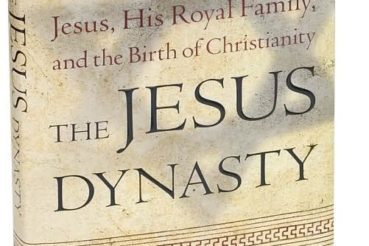
Back in 1991 I published a little book titled Restoring Abrahamic Faith with a small non-profit publisher called Genesis 2000. It was more or less in response to questions I was getting from many quarters regarding my own “beliefs.” It was mainly an attempt to save my “breath,” so I could refer it to those who were curious about my own personal faith, or the lack thereof.  Also, in the final chapter of my popular book, The Jesus Dynasty, that was intended for general audiences far beyond my academic arena, I did include, a final “Conclusion” that delved into matters of faith and the consequences of historical Jesus studies–mentioning my view of “Abrahamic Faith.” In 2008 an expanded, 3rd edition, of that 1991 1st edition was released.  It is now available either directly from the publisher (http://genesis2000.org) or through Amazon. And yes, alas, it also has a Facebook Fan page! It is not generally available in bookstores though it can be special ordered but for my Blog readers who order through the publisher, Genesis2000, or through Amazon, copies are autographed at no charge.

I am most pleased and gratified to have received a positive endorsement this 3rd edition of Restoring Abrahamic Faith, from none other than Dr. Barrie Wilson, professor of Religious Studies at York University in Toronto and author of the recent best-seller, How Jesus Became Christian. You can read all about him and his important book at his Web site: http://www.barriewilson.com/. Dr. Wilson’s book, out now in paperback, is in my view the most important book written on Christian origins, and Paul in particular, in the past decade.

Although I did not write Restoring Abrahamic Faith primarily for my academic colleagues it is surely gratifying to have someone of the caliber of Dr. Wilson to write so positively about the book. Here are his personal comments:

Hi James,

You’ve produced a superb manifesto in this book, very similar in many ways to my own personal credo. It is truly a wonderful, inspirational book that should draw people back to the fundamental biblical message, one which puts Jesus, James and John the Baptizer into context. I have added it to my “Recommended Reading” on my Web site. I think the chapter on The Messiahs is especially well done and I’ll direct my students to the book, especially for that chapter. What constitutes a Messiah, as opposed to a Savior, remains a perennial favorite amongst my students.

I personally learned a lot from the chapter on “The Plan” – hadn’t thought of thinking about the future quite that way – and “Turning To God” is very similar to the kind of message I advocate when speaking in churches/synagogues.

This coming summer I’m teaching an honors seminar on early Christianity. We’ll use The Jesus Dynasty and one of the research projects I’ll assign will have to do with what constitutes a Messiah. Those individuals will have to obtain Restoring Abrahamic Faith.

If you are interested I hope you will order a copy and let me know what you think of the ideas I present. As with many such books of this kind, readers tend to either love it or hate it, depending on one’s presuppositions and approach to matters of biblical faith. I welcome the dialog and discussions on the Facebook page are open.


New Book by Jeffrey Bütz: The Secret Legacy of Jesus

Tuesday, January 26th, 2010

Sometime in Spring, 2006 I was browsing one of the local bookstores here in Charlotte and came across a title that seemed to jump of the shelves–The Brother of Jesus and the Lost Teachings of Christianity by Jeffrey Bütz. In thumbing through the book I immediately realized that the brother in question was none other than James the Just, head of the Jerusalem Nazarene movement following the death of Jesus. I was aware, of course, of Robert Eisenman’s well known book, James the Brother of Jesus and John Painter’s valuable study, Just James, as well as several edited volumes on James by Craig Evans, Bruce Chilton, and Jacob Neusner. In fact, in our field of Christian Origins it seems that James, marginalized and forgotten for centuries, was having a bit of a renaissance. I had never heard of Jeffrey Bütz but decided to get the book anyway and see what it might offer. To say I was pleasantly surprised would be an understatement. My own book, The Jesus Dynasty had just been published and dealt substantially with James the brother of Jesus. I quickly realized that Bütz and I had independently come to many of the same conclusions and we began to exchange e-mails, eventually met, and even spent time together in the Jerusalem, digging at Mt. Zion and hanging in the Old City where Bütz was doing research on his next book, just out, with the provocative title The Secret Legacy of Jesus: The Judaic Teachings That Passed from James the Just to the Founding Fathers.

I read the manuscript in draft form and found this latest work by Bütz both fascinating and provocative. On the face of it the thesis of Reverend Jeffrey Bütz’s new book might strike one as far-fetched if not downright absurd, namely that the “true teachings” of Jesus were passed in some underground fashion, down through the ages, and ended up shaping the vision of the Founding Fathers as they forged the principles and ideals of the United States of America. Over the past decade the bookstores have been full of new titles claiming to reveal at last some lost, forgotten, suppressed, hidden, “underground” stream of Christianity, with connections to various esoteric traditions within Western history. The titles speak for themselves: Holy Blood, Holy Grail, The DaVinci Code, The Hiram Key, The Templar Revelation. Few of these works have received the attention, much less the academic endorsement, of mainstream historians, and probably for good reason. They are often long on speculation and short on hard evidence. It would be a mistake for readers to classify Bütz’s latest work in this genre. In contrast, it is a serious work, in touch with mainstream scholarship, and characterized by full references to original source materials.

Admittedly the trail Bütz follows, from Jesus to Jefferson, is a faint one, with many dead ends, twists, and turns. After all, groups such as the Ebionites, the Desposyni, the Elkesaits, and the Cathars are hardly household names. Bütz’s imaginative but careful consideration of evidence pays off and results in a fascinating thesis that informs the very roots of our American culture.

The book is divided into three parts. Parts I and II, making up about two-thirds of the whole, deals with the roots and history of what Bütz calls “Jewish Christianity.” The term refers to those original Jewish followers of Jesus, led by James the brother of Jesus, who continued in their Jewish beliefs and practices, rejected Paul and the Nicean Church, and according to most scholars continued into the late 4th century, particularly in areas east of Palestine. These followers of Jesus valued the royal “bloodline” of the Jesus family, whether that of Jesus himself, if he was married with children, or that of his brothers and immediate family. Indeed, Bütz argues that these successors of Jesus and his brother James can properly be viewed as a type of “Caliphate,” in many ways similar to the Shiite branch of Islam. Bütz further argues that these “Nazarenes” set up a provisional government with their own Sanhedrin led by James as high priest, and the Twelve apostles as a kind of inner ruling cabinet. Bütz further locates the operations of this sectarian “government,” on the southwest hill called Mt Zion where both Armenian and Catholic traditions place the “throne” of James, the “Upper Room,” and the house of Mary and the Jesus family.

By far the majority of scholars who have dealt with this branch of “Jewish Christianity” have tended to trail things off in the late 4th century where most of our records seem to terminate. Bütz take things much farther, and herein lays the special value and contribution of his work. Not only does he pick up on the “Ebionite” trail through an obscure sect of southern Mesopotamia known to us as the Elkasites, but in Part III of his treatment he convincingly traces the key characteristics of this original “Jewish Christian” perspective into early Islam as well. Although the chapter on Islam is somewhat of an excursus, Bütz returns to his more linear story line as he moves from the Elkasites through the Cathars, and thus to the Templars and earliest roots of Freemasonry. It is these last one hundred pages of his book that Bütz truly offers the reader, and in my estimation, the academic world as well, the skeletal framework of a wholly new perspective on the ideas that were most influential upon our Founding Fathers. Here I have in mind specifically the ways in which they imagined America as a sort of New Jerusalem/Promised Land. Other historians have touched on this sort of biblically based idealism, but I think Bütz might be the first to suggest there is an actual current or stream of influence running back into antiquity. I for one find it rather convincing. The history of ideas always remains a tenuous enterprise with no definable terminia post/ad quem, but as Jonathan Z. Smith, the most eminent history of religions used to put things—even an exaggeration in the direction of the truth is progress. I believe that Reverend Bütz has provided us with new perspectives waiting to be tested with subsequent review and consideration. I for one am grateful to him for the opportunity to consider this innovative approach to understanding the roots of our American founding and its ideals.

Newsletter Subscription
*Email:
*Format:
Fname:
Lname:
Categories
Archives